500+ bathroom installations across London & Wembley · 15-year warranty · Free templates
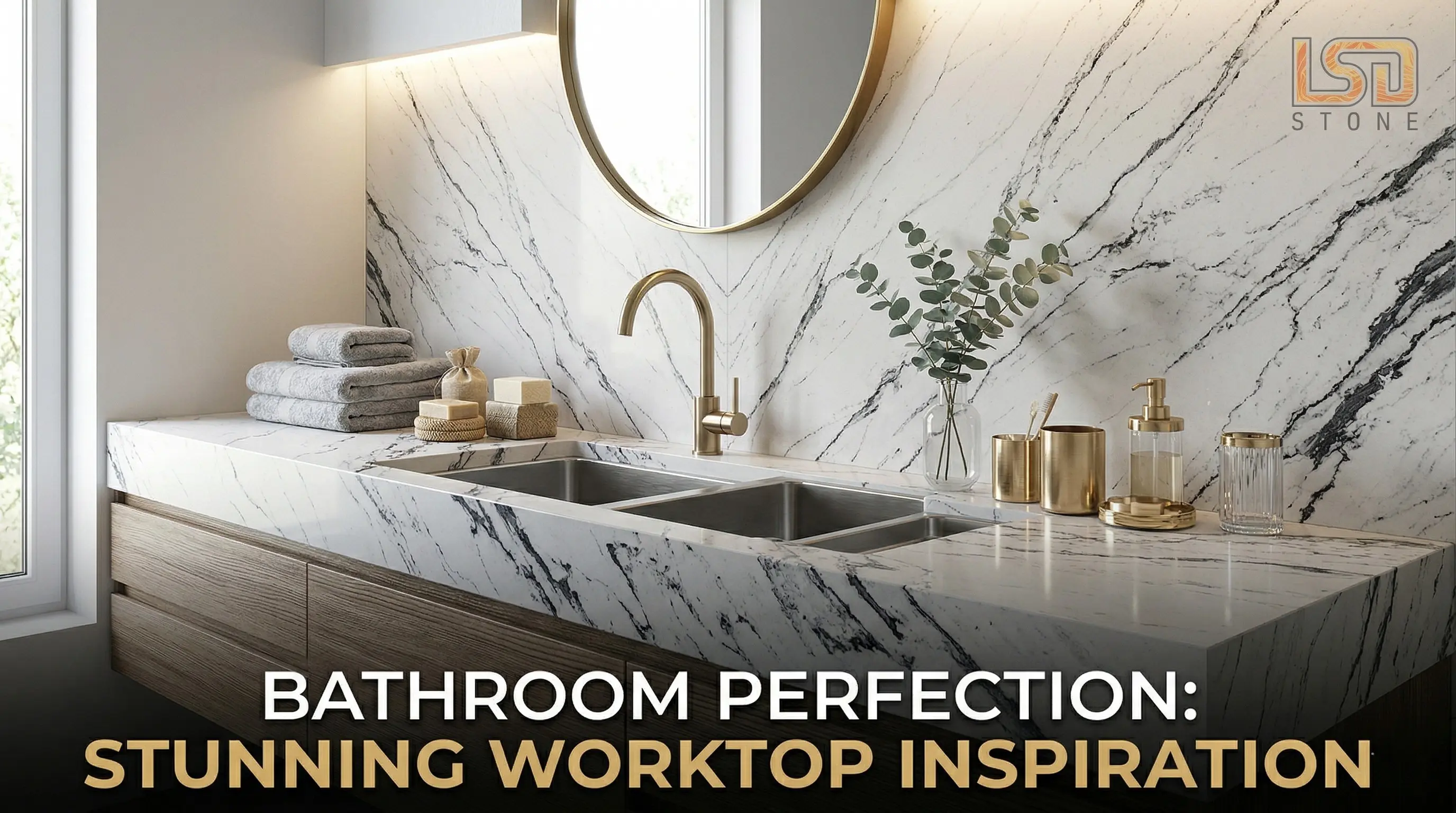
Why Your Bathroom Worktop Matters More Than You Think
Most people spend a lot of time choosing their bath, tiles, and shower fittings — and then treat the worktop as an afterthought. That is a mistake.
Your bathroom worktop is one of the hardest-working surfaces in your home. It gets splashed with water every single day. It comes into contact with toothpaste, hairspray, bleach-based cleaning products, make-up, and hot styling tools. And unlike your kitchen worktop, it rarely gets a day off.
Choose the wrong material and you will be dealing with swelling edges, stained surfaces, and a worktop that looks tired within a couple of years. Choose the right one and you will have a surface that stays looking great for a decade or more — with very little effort from you.
In this guide, we break down everything you need to know about bathroom worktops — the materials available, how they compare, what they cost, and how to pick the right one for your bathroom. By the end, you will know exactly what to look for.
If you already know your material and want a price — get a free quote in 60 seconds →
Are Bathroom Worktops Different from Kitchen Worktops?
This is one of the most common questions we get at LSD Stone — and the answer is: not really.
The materials used for bathroom worktops are largely the same as those used in kitchens — quartz, marble, granite, Dekton, and porcelain. The main differences are in size and the specific demands of the environment.
Bathroom worktops are typically narrower — most vanity units are 400mm to 500mm deep, compared to the standard 600mm depth of a kitchen worktop. They also sit in a smaller, more enclosed space, which means moisture and steam are a bigger factor.
| Key difference: Bathroom worktops need to handle constant moisture and humidity — not just occasional spills. Always choose a non-porous or properly sealed material for bathroom use. |
The good news is that stone and engineered stone worktops — the materials we specialise in at LSD Stone — are perfectly suited to bathroom environments. Many of our customers use the exact same slabs for their bathroom vanity as they do for their kitchen, creating a beautiful consistent aesthetic throughout their home.
The Main Bathroom Worktop Materials Compared
Here is a quick comparison of all five main bathroom worktop materials:
| Material | Water Resistance | Durability | Maintenance |
| Quartz | Excellent | Excellent | Very Low |
| Marble | Good | Very Good | Medium |
| Granite | Very Good | Excellent | Low |
| Dekton | Excellent | Excellent | Very Low |
| Porcelain | Excellent | Very Good | Very Low |
Quartz Bathroom Worktops
Quartz is the most popular choice for bathroom worktops in the UK — and once you understand why, it is easy to see why so many homeowners end up choosing it.
Quartz is an engineered stone made from around 90 to 94 percent natural quartz crystals bound with polymer resins. The manufacturing process makes the surface completely non-porous — which means water, bacteria, mould, and moisture simply cannot penetrate it. For a bathroom environment where surfaces are constantly exposed to water and steam, that is a massive practical advantage.
It does not need sealing. It does not need special cleaning products. A simple wipe with a damp cloth is genuinely all it takes to keep a quartz bathroom worktop looking new. For busy households where time is limited, that kind of low maintenance is invaluable.
From a design perspective, quartz gives you enormous choice. At LSD Stone, we stock everything from classic white and soft cream tones to dramatic dark charcoals and realistic marble-effect designs. You can achieve the look of natural stone — with all the practicality of an engineered surface.
| Pros | Cons |
+ Completely non-porous — never needs sealing + Highly resistant to stains, moisture, and bacteria + Scratch and chip resistant + Enormous colour and pattern range + Very low maintenance — wipe clean daily + Consistent appearance across the full slab + 15 year manufacturer warranty available | + Can be damaged by prolonged direct heat from styling tools + More expensive than laminate options + Engineered — not natural stone |
| Our verdict: Quartz is our number one recommendation for bathroom worktops. It ticks every box — durability, low maintenance, water resistance, and a wide range of beautiful designs. Genuinely hard to find a reason not to choose it. |
Marble Bathroom Worktops
There is nothing quite like real marble. The flowing veining, the subtle depth, the way light moves across a polished surface — marble has a natural beauty that no engineered material has ever fully replicated. If you want your bathroom to feel genuinely luxurious, marble is hard to argue with.
In a bathroom setting, marble works particularly well because it stays naturally cool — making it a pleasure to touch. It also works beautifully as a vanity top paired with an undermount or vessel sink, where the full slab can be displayed without interruption.
However, marble does require a little more care than quartz or granite. It is a porous material, which means it needs to be sealed regularly to protect it from staining — particularly from products like toothpaste, perfume, and acidic cleaners. With proper sealing and sensible maintenance, marble bathroom worktops can last for decades and age beautifully.
Popular marble varieties for bathrooms include Carrara (white with grey veining), Calacatta (white with bold gold or grey veining), and Statuario (bright white with dramatic veining). Each slab is completely unique — which is part of what makes marble so special.
| Pros | Cons |
+ Genuinely beautiful — timeless and unique. + Naturally cool surface + Every slab is one of a kind + Adds real value to your property + Available in polished or honed finish + Ages beautifully with proper care | + Porous — needs regular sealing + Can stain if left unsealed + Sensitive to acidic products + Requires more care than quartz + Higher price point |
| Our verdict: Marble is the premium choice for homeowners who want genuine luxury and are happy to maintain it properly. If you love the look and are willing to seal it periodically, marble will reward you with a bathroom that feels genuinely special. |
Granite Bathroom Worktops
Granite does not always get the attention it deserves when it comes to bathrooms — but it absolutely should. It is one of the hardest natural stones available, incredibly durable, highly resistant to heat and scratching, and full of natural character.
Like marble, granite is a natural stone — meaning every slab carries its own unique pattern of minerals, grains, and movement. No two granite bathroom worktops will ever look exactly the same. If you want the beauty and authenticity of natural stone without paying marble prices, granite is a genuinely excellent option.
Granite is denser than marble and slightly more resistant to moisture — though it still benefits from periodic sealing in a bathroom environment. Once sealed, it is easy to clean and highly resistant to everyday bathroom products.
| Pros | Cons |
+ One of the hardest natural stones available + Extremely scratch and heat resistant + Natural character — no two slabs alike + More affordable than marble + Long lasting and durable | + Needs periodic sealing in bathroom use + Heavy — may need cabinet reinforcement + Limited colour range compared to quartz |
| Our verdict: Granite is a brilliant choice if you want natural stone durability at a more accessible price than marble. It is tough, beautiful, and handles a bathroom environment very well with proper sealing. |
Dekton Bathroom Worktops
Dekton is the most technically advanced worktop material available today — and in a bathroom setting, its performance characteristics are genuinely impressive.
Developed by Cosentino using a process called Particle Sintering Technology, Dekton has virtually zero porosity. That means no moisture absorption whatsoever — no matter how wet or steamy your bathroom gets. It never needs sealing. It is resistant to scratches, stains, UV light, and extreme heat.
Dekton is available in a slim 12mm profile — giving it a very contemporary, lightweight look that works particularly well in modern bathroom designs. It also comes in large format slabs, allowing for seamless installations with minimal joints — a very clean, architectural finish that is increasingly popular.
The one consideration is price — Dekton sits at the premium end of the market. But if you want a surface that will last a lifetime with virtually no maintenance, the investment can absolutely be justified.
| Pros | Cons |
+ Zero porosity — no sealing ever needed + Extreme heat, scratch, and UV resistance + Available in slim 12mm profile + Large format slabs — minimal joints + Suitable for outdoor bathrooms + Virtually zero maintenance | + Premium price point + Requires professional installation + Fewer colour options than quartz |
| Our verdict: If budget is not a primary concern and you want the absolute best performing bathroom worktop material available, Dekton is the answer. Built to last a lifetime with almost no effort from you. |
Porcelain Bathroom Worktops
Porcelain has grown enormously in popularity as a bathroom worktop material over the last few years — and it is easy to understand why. It combines excellent practical performance with a slim, contemporary aesthetic that works beautifully in modern bathroom designs.
Modern porcelain worktops are fired at extremely high temperatures, making them incredibly dense, non-porous, and highly resistant to moisture, stains, and UV light. They are lighter than quartz or granite — making them suitable for situations where cabinet loading is a consideration.
The slim 12mm profile is one of porcelain's most distinctive features. It creates a sleek, architectural look that is very popular in contemporary and minimalist bathrooms. Large format porcelain slabs can also be used for wall panels and bath surrounds — creating a fully coordinated, seamless bathroom design.
| Pros | Cons |
+ Non-porous — no sealing required + Lightweight compared to stone + Slim 12mm profile — sleek contemporary look + UV and fade resistant + Available in realistic stone and marble effects | + Can chip at edges if impacted + Requires precision cutting — professional fitting essential + Thinner profile may not suit all styles |
| Our verdict: Porcelain is an excellent choice for modern bathrooms — particularly where a slim profile, large format installation, or lightweight surface is needed. It performs brilliantly and looks fantastic in contemporary designs. |
How to Choose the Right Material for Your Bathroom
With so many good options available, the right material depends on four things: your lifestyle, your budget, your aesthetic preference, and how much maintenance you are realistically willing to do.
| Bathroom Type | Best Choice | Why |
| Busy Family Bathroom | Quartz | Non-porous, zero maintenance, wipes clean instantly |
| Luxury Master Bathroom | Marble or Dekton | Premium aesthetics, transforms the space entirely |
| Modern Minimalist | Porcelain or Dekton | Slim 12mm profile, large slabs, clean architectural lines |
| Value for Money | Granite | Natural stone durability at a more accessible price than marble |
| Pro tip: If you are renovating your kitchen and bathroom at the same time, consider using the same worktop material in both spaces. It creates a beautifully cohesive feel throughout your home — and you may be able to negotiate a better overall price. |
How to Care for Your Bathroom Worktop
The good news is that most premium bathroom worktop materials are genuinely low maintenance. Here is a quick care guide:
Quartz
Wipe clean with warm soapy water and a soft cloth. No sealing required — ever. Avoid abrasive cleaners or scouring pads. Keep neat hair dye and strong bleach off the surface.
Marble
Seal every 6 to 12 months with a quality stone sealer. Wipe spills immediately — especially acidic products like perfume and some toothpastes. Clean with a pH-neutral stone cleaner. Avoid bleach and acidic sprays.
Granite
Seal once or twice a year in a bathroom environment. Clean with warm water and mild soap. Avoid harsh chemical cleaners that could break down the sealant over time.
Dekton
Virtually zero maintenance required. Wipe clean with any standard bathroom cleaner. No sealing needed. Resistant to almost everything — including bleach-based products.
Porcelain
Wipe clean with a damp cloth and mild detergent. No sealing required. Avoid sharp impacts on the edges, as porcelain can chip if struck with force. Otherwise, extremely easy to maintain.
Frequently Asked Questions
Q: What is the best material for a bathroom worktop?
A: For most homeowners, quartz is the best all-round choice. It is non-porous, extremely durable, requires zero maintenance, and is available in a huge range of colours and designs. For those who want pure luxury, marble is hard to beat — but requires more care. If you want the highest performance surface available, Dekton is unmatched.
Q: Can I use a kitchen worktop in a bathroom?
A: Yes — in most cases. The materials used for kitchen worktops (quartz, marble, granite, Dekton, porcelain) are exactly the same materials used for bathroom worktops. The main difference is size — bathroom vanity units are typically narrower, so your worktop is simply cut to the appropriate dimensions. At LSD Stone, we cut every worktop to your exact measurements.
Q: How long do bathroom worktops last?
A: A properly installed and maintained stone bathroom worktop should last for 20 to 30 years or more. Many natural stone worktops outlast the rest of the bathroom around them. Quartz and Dekton are particularly long-lasting, with some manufacturers offering warranties of up to 15 years or more.
Q: Do bathroom worktops need to be sealed?
A: It depends on the material. Quartz, Dekton, and porcelain are all non-porous and never need sealing. Natural marble and granite are porous and should be sealed periodically — marble every 6 to 12 months, granite once or twice a year in a bathroom setting. We always provide full aftercare guidance with every installation.
Q: Can I have an integrated sink with a stone bathroom worktop?
A: Yes. Undermount sinks — where the sink is fitted below the worktop surface — work beautifully with quartz, granite, marble, and Dekton. They create a seamless look that is easy to clean and very popular in contemporary and luxury bathrooms. We handle all sink cutouts in-house as part of our standard fabrication process.
Ready to Choose Your Bathroom Worktop?
Choosing a bathroom worktop does not need to be complicated — but it does need some thought. Get the material right for your specific bathroom, your lifestyle, and your budget, and you will end up with a surface that looks great and performs brilliantly for many years to come.
At LSD Stone, we supply and install all of the materials covered in this guide — quartz, marble, granite, Dekton, and porcelain — across Wembley, London, and the wider UK. Every worktop is templated, fabricated, and fitted in-house by our own team, with free quotations and no hidden costs.
If you would like to come and see our full slab collection in person, our showroom is at East Lane Business Park, 3 Courtenay Road, Wembley, HA9 7ND. Or simply get in touch and we will be happy to help.
Get a Free Quote for Your Bathroom Worktop Tell us about your bathroom and we will give you a clear, honest price — no obligation, no hidden costs. 3 Courtenay Rd, East Lane Business Park, Wembley, HA9 7ND 020 3325 4665 info@lsdstone.com | www.lsdstone.com |